
Agentic AI is software that sets its own sub-goals, takes real-world actions using tools, and keeps iterating until a task is complete — without a human steering every step. Unlike a chatbot that waits for your next message, an agentic AI system perceives its environment, makes a plan, acts on that plan, and adjusts when something changes. It runs toward a goal, not just toward a response.
That distinction matters more than it might first appear, and the rest of this guide unpacks exactly why.
How Agentic AI Differs from Tools You Already Use
Most marketers have used at least two or three generations of AI: maybe a rule-based workflow tool, then a chatbot, then something like ChatGPT. Agentic AI is the next step in that progression, and the jump is significant. The table below shows where the line falls.
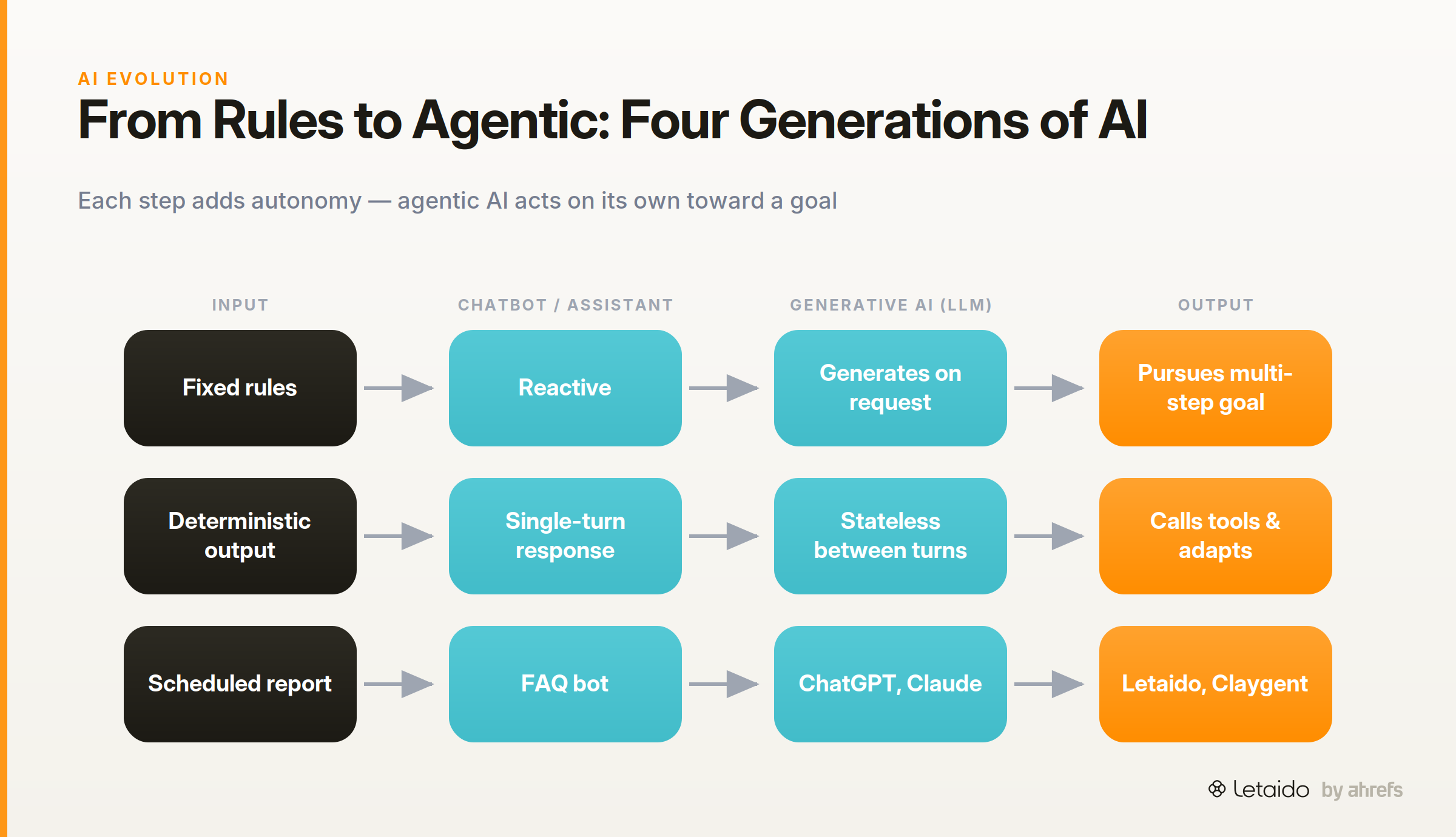
| Type | How it behaves | Typical example |
|---|---|---|
| Traditional software | Follows fixed rules; deterministic; no reasoning | An automated report emailed every Monday |
| Chatbot / AI assistant | Responds to a single prompt; no persistent goal | A support bot that answers FAQs |
| Generative AI (LLM) | Generates text, code, or images on request; stateless between turns | ChatGPT, Claude |
| Agentic AI | Pursues a multi-step goal autonomously; calls tools; adapts when circumstances change | An agent that monitors rankings, detects a drop, and files a Slack alert — unprompted |
The single key leap is from responds when asked to acts on its own toward a goal. Each of the subsections below makes one column of that table concrete.
Agentic AI vs. Traditional Software
Traditional software is deterministic: given the same input, it produces the same output every time, because a human wrote every rule in advance. It cannot reason about an unexpected situation or decide to do something it was not explicitly programmed to do. When conditions change, it breaks or returns an error — it does not adapt.
Agentic AI vs. Chatbots and AI Assistants
Chatbots are reactive and single-turn. You send a message; they send one back. Even conversational AI assistants with memory are fundamentally waiting for your next prompt. An agentic system, by contrast, holds a goal across time. It does not need you to say "now check the rankings" — it already knows that is part of the job, and it runs the check on schedule.
Agentic AI vs. Generative AI
Generative AI, meaning large language modelsLarge language modelA model trained on vast amounts of text to predict the next token, which is what lets it write, summarise, and reason over language. (LLMs) like GPT-4o or Claude 3.5, is remarkably capable at producing text, code, analysis, and more. But it generates on request and stops. You prompt it; it responds; the session ends. Agentic AI wraps that generative capability inside a goal-directed loop: the model not only produces output but decides what action to take next, executes that action via a tool, evaluates the result, and continues until the objective is met.
AI Agents vs. Agentic AI
These two terms are often used interchangeably, but there is a useful distinction. An AI agentAI agentA system that combines a language model with tools and a goal, so it can decide what to do next and act — not just generate text.Read: What Are AI Agents? Definition, Types, and Examples is a single component: one autonomous unit with a specific role, a set of tools, and the ability to take actions. Agentic AI is the broader paradigm — the architectural approach in which one or more agents operate autonomously to complete complex, multi-step work. You can have agentic AI built from a single agent, or from a coordinated network of many. The agents are the parts; agentic AI is the system.
The Core Traits That Make an AI System "Agentic"
Calling something "agentic" is not just marketing language — it points to a specific cluster of capabilities that distinguish these systems from ordinary AI. The four traits below are what AWS defines as the hallmarks of an autonomous AI system that "can act independently." Each one has practical consequences for how you would actually use the system.
Autonomy and Goal-Driven Behavior
An agentic system does not need to be re-prompted at every step. You give it an objective — "monitor our top 20 keywords and alert me if any drop more than five positions" — and it pursues that objective on its own, breaking it into sub-tasks, deciding which tools to use, and executing them without further instruction. This is what McKinsey & Company describes as the ability to "set goals, plan, and execute tasks with minimal human intervention."
Proactivity and Adaptability
Agentic AI does not wait for a trigger. It monitors conditions, notices when something has changed, and adjusts its plan accordingly. If a keyword drops unexpectedly on a day that was not a scheduled check, a well-configured agent catches it anyway. If one tool call fails, the agent can try an alternative approach rather than returning an error.
Tool Use and Real-World Action
This is what separates an agentic AI from a capable language model sitting in a chat window. Agents can call APIs, read and write data, post messages, update records, and trigger events in external systems. They interact with the world, not just with text. Without tool useTool useLetting a model call external functions — search, a database, an API — so it can act on the world instead of only describing it., autonomy is theoretical; with it, autonomy is operational.
Single-Agent vs. Multi-Agent Setups
Some tasks are handled by a single agent working through a list of steps. More complex workflows split the work across multiple specialized agents: one for data retrieval, one for analysis, one for writing, one for delivery. An orchestrator coordinates the hand-offs. This kind of multi-agent architecture is worth understanding at a basic level, because it is how the most capable commercial systems are already built. A deeper treatment of multi-agentMulti-agent systemSeveral specialised agents working together on one job, each owning a step, coordinated by a planner or a shared workflow. systems deserves its own article, but the key point here is that agentic AI scales horizontally as well as vertically.
How Agentic AI Works: The Perception–Plan–Act–Reflect Loop
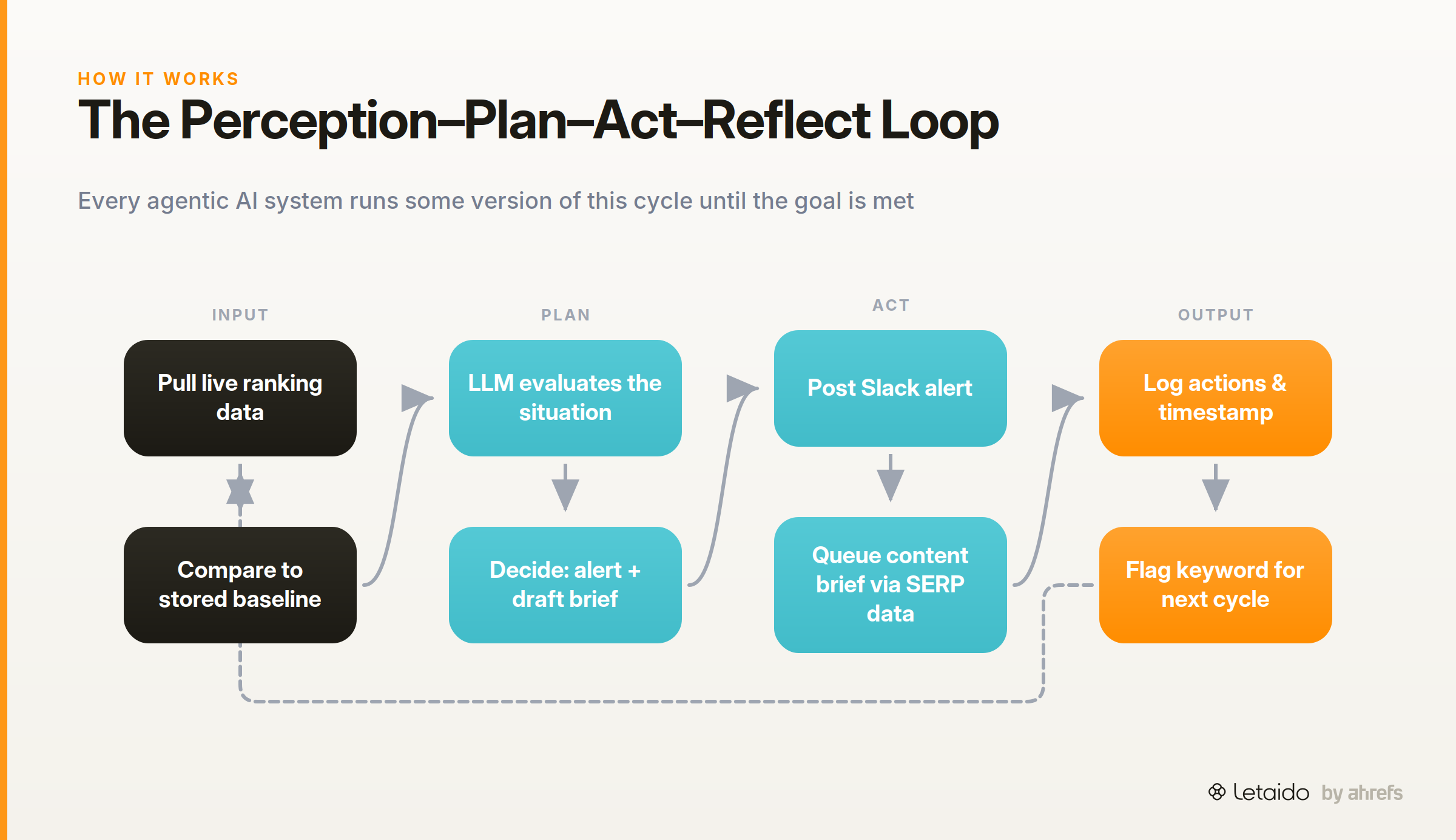
The mechanics of agentic AI can be understood as a four-stage loop that repeats until the goal is met. Every agent runs some version of this loop, whether it is a research assistant gathering competitor data or a monitoring agent watching your organic rankings. The subsections below walk through each stage, then show the whole loop applied to a real marketing task.
The LLM as the Reasoning Engine
At the center of most agentic AI systems is a large language model (LLM): a neural network trained on vast amounts of text that can read a situation, reason about it, and decide what to do next. The LLM is not the whole agent — it is the decision-making layer. Around it sits the scaffolding that gives the model memory, access to tools, and the ability to execute actions in the real world. Think of the LLM as the brain and the agent infrastructure as the body.
Step-by-Step: Perception, Planning, Action, and Reflection
Here is the loop applied to a concrete marketing task: an agent assigned to monitor your site's top keyword rankings.
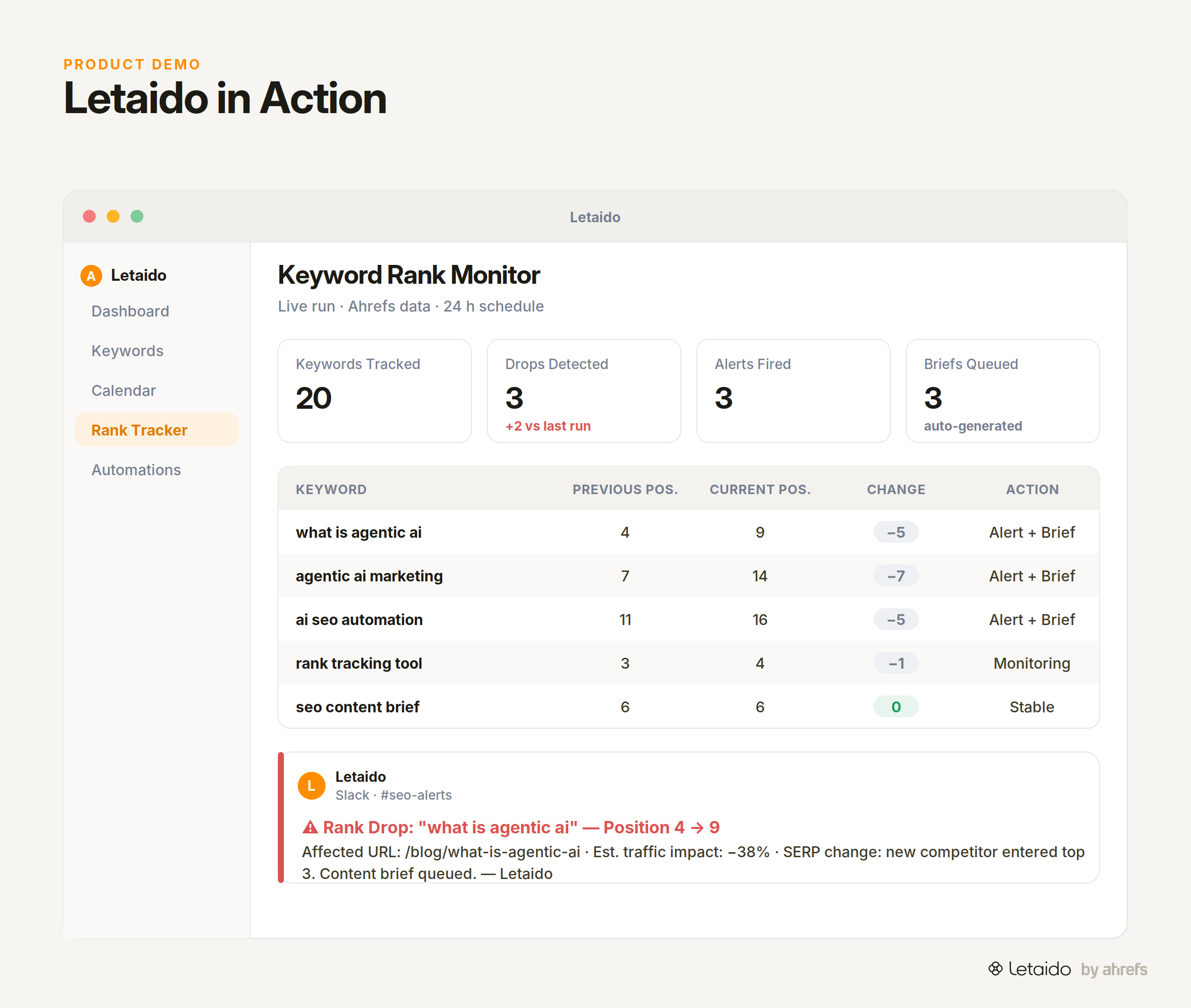
- Perceive. The agent pulls current ranking data from a live source, such as Ahrefs' rank tracking data, and compares it against the previous state stored in memory.
- Plan. The LLM evaluates what it sees. A five-position drop on a target keyword that has been stable for three months is significant. The agent decides: alert the team, and draft a preliminary brief on what might have changed.
- Act. The agent posts a structured Slack alert with the affected keyword, current and previous positions, and estimated traffic impact. It also queues a content brief for the page, pulling SERPSERPThe search engine results page — the full set of organic listings, ads, and features returned for a query. data to identify what top-ranking pages now include that yours does not.
- Reflect. The agent logs what it did, timestamps the event, and flags the keyword for closer monitoring in the next cycle. If the alert was acknowledged and a task was created, it notes that too. This log is what makes the system auditable.
This entire sequence runs without you opening a browser.
How Agents Take Real-World Action: Tools and APIs
Agents connect to the world through tool calls: structured requests to external systems via APIs (application programming interfaces, which are standardized ways for software to talk to other software). An agent monitoring SEO rankings might call the Ahrefs data layer for keyword positions, call Slack's API to post a message, and write a summary to a Notion database — all in a single run. The agent does not "use" these tools the way a human does; it issues programmatic requests and processes the responses as part of its reasoning loop.
Human-in-the-Loop: Where Oversight Fits In
Not every agentic system runs fully autonomously. Many implement human-in-the-loop checkpoints: the agent plans and prepares an action, but waits for a human to approve before executing it. This is especially common for irreversible actions, such as publishing content, changing ad bids, or sending emails. MIT Sloan's explainer on agentic AI notes that the level of autonomy is a design choice, not a fixed property of the technology. Where you set that dial depends on how much you trust the agent's outputs and how costly a mistake would be.
What Agentic AI Looks Like in Practice
Definitions and diagrams only go so far. The clearest way to understand agentic AI is to see what it actually does — across industries first, then in a marketing context specifically.
General Applications Across Industries
Agentic AI is already embedded in a wide range of commercial workflows. In customer service, agents handle multi-step support cases: looking up account details, issuing refunds, escalating edge cases — without a human touching each ticket. In financial services, agents monitor transactions in real time and flag potential fraud based on behavioral patterns, not just static rules. In supply chain management, agents track inventory levels, model demand changes, and trigger reordering workflows before a stockout occurs.
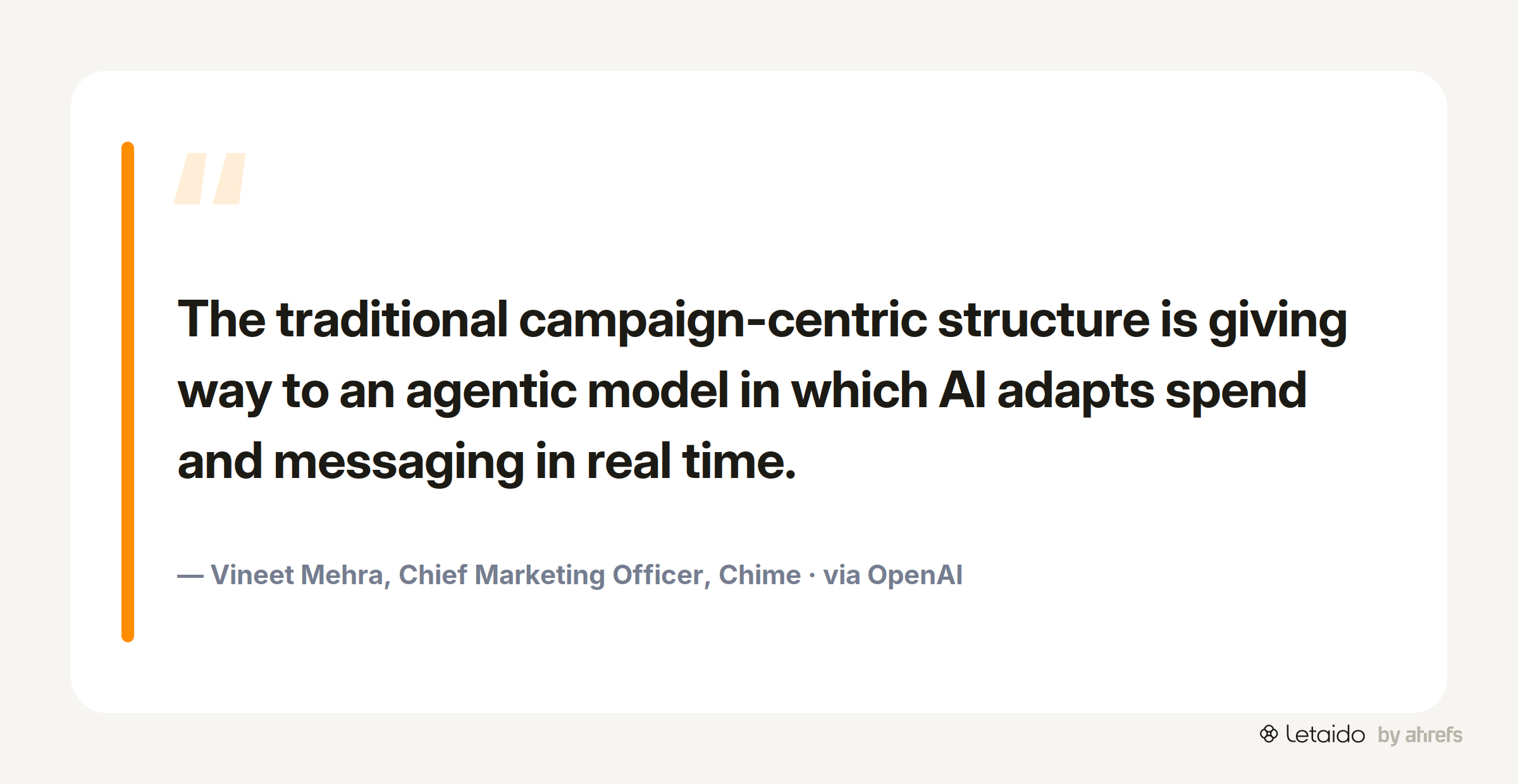
The scale of adoption is real. OpenAI's 2025 State of Enterprise AI report notes that more than one million business customers now use its tools. Expedia Group uses OpenAI-powered tools across its marketing and content operations for summarization, trendspotting, and real-time analysis — including content quality moderation. Chime's Chief Marketing Officer put it plainly: "the traditional campaign-centric structure is giving way to an agentic model" in which AI adapts spend and messaging in real time.
Agentic AI for Marketing Teams: A Concrete Walkthrough
The most useful illustration of agentic AI for a marketer is not a hypothetical — it is a description of what a working agent actually does.
Letaido is built specifically for SEO and content teams, with direct access to Ahrefs data. Here is what an end-to-end monitoring workflow looks like in practice: Letaido pulls live keyword ranking data from Ahrefs Site Explorer and Rank Tracker, compares current positions against a baseline, and evaluates every tracked keyword against configurable drop thresholds. When a target keyword crosses the threshold — say, dropping five or more positions — the agent fires a Slack alert with the keyword, the magnitude of the drop, the affected URL, and a preliminary read on what changed in the SERP (new competitors entering the top three, a featured snippet flip, and so on). In the same run, it queues a content brief for the underperforming page using live SERP structure, so the writer picking up the task already has context. All of this runs on a schedule, 24 hours a day, without anyone opening a dashboard.
That is agentic AI: perceive, plan, act, reflect — applied to a task that would otherwise require a human to remember to check, know what to look for, and manually compile the output.
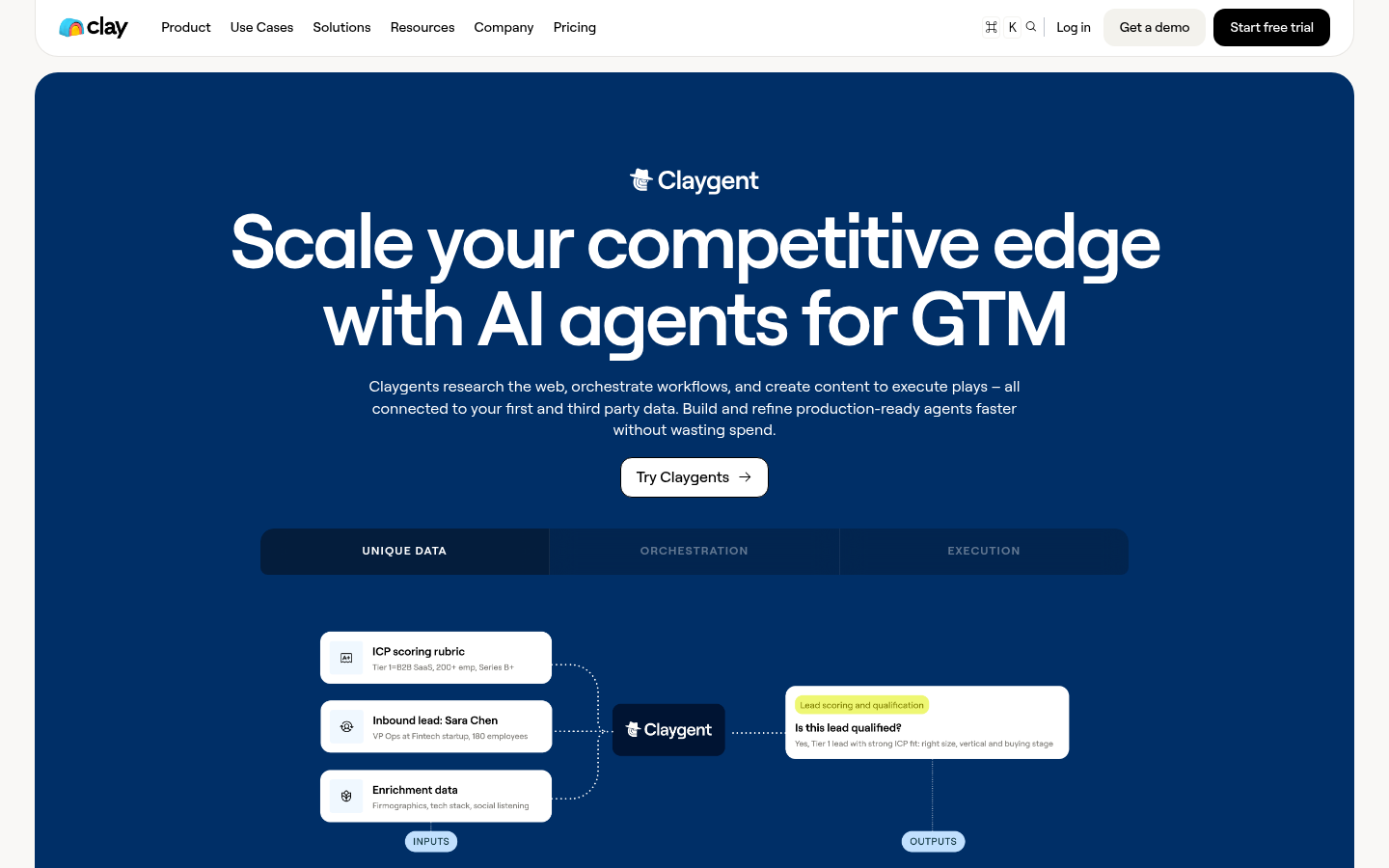
Claygent is another instructive example, this time in the sales and prospecting domain. It is an AI web-research agent inside Clay that navigates live web pages, fills out forms, and extracts structured data from public sources — finding company signals, scanning career pages, pulling recent news. One G2 reviewer described it this way: "Claygent has been particularly useful for handling unstructured tasks, like scanning career pages and pulling recent news, making pre-call preparation more efficient." The underlying pattern is the same as Letaido's: a goal, a set of tools, and autonomous execution.
Genspark Super Agent represents a third variant: a general-purpose research-and-execution agent that routes a single prompt through multiple models and specialized sub-agents to plan, execute, and assemble the requested work — producing slides, documents, or structured data from a one-line instruction. The architecture differs, but the agentic pattern is consistent.
Purpose-Built vs. Platform-Embedded Agents
It is worth distinguishing two broad categories of agentic AI tools, because they call for different adoption decisions.
Standalone agents like Letaido and Claygent are purpose-built for specific workflows and typically require some setup but offer deeper capability within their domain.
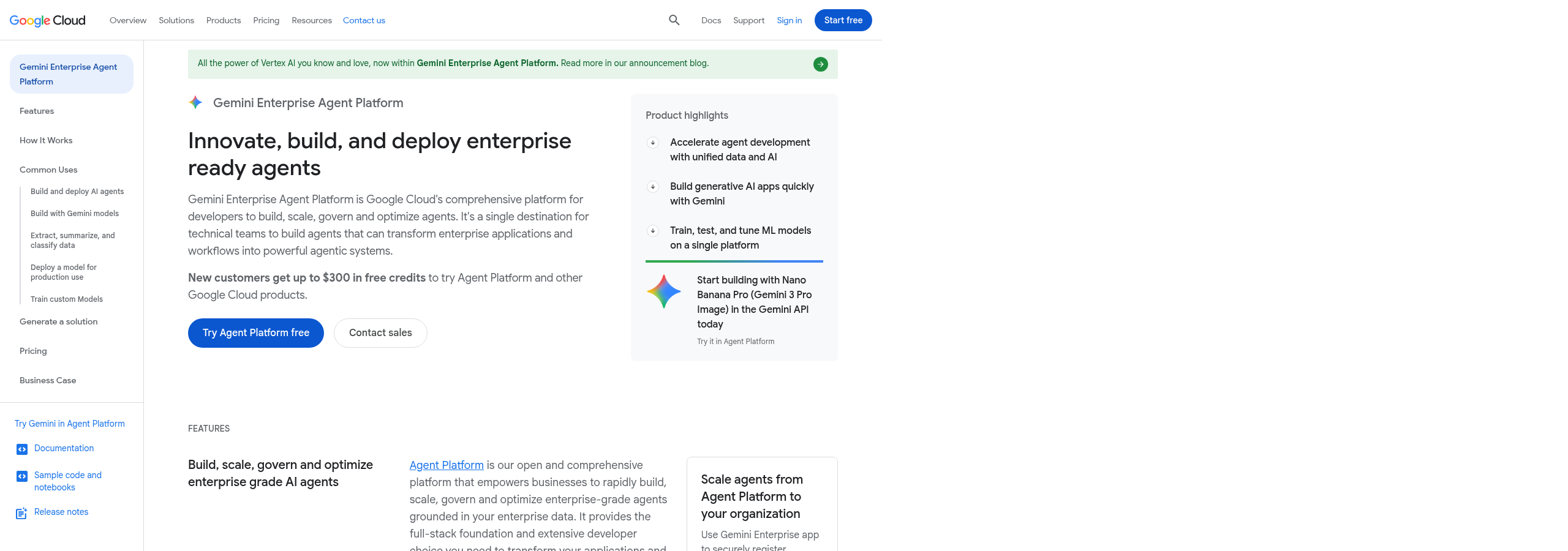
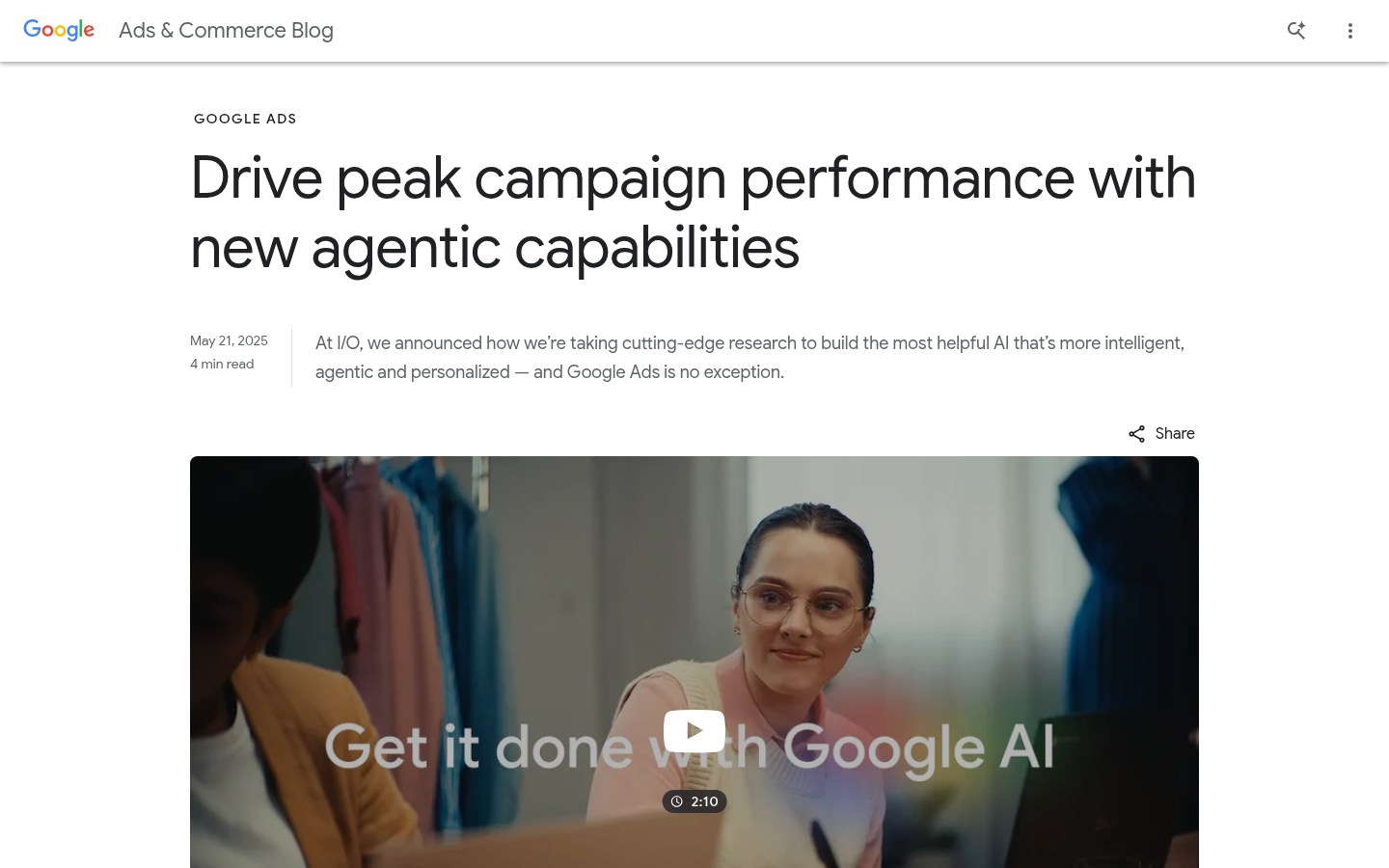
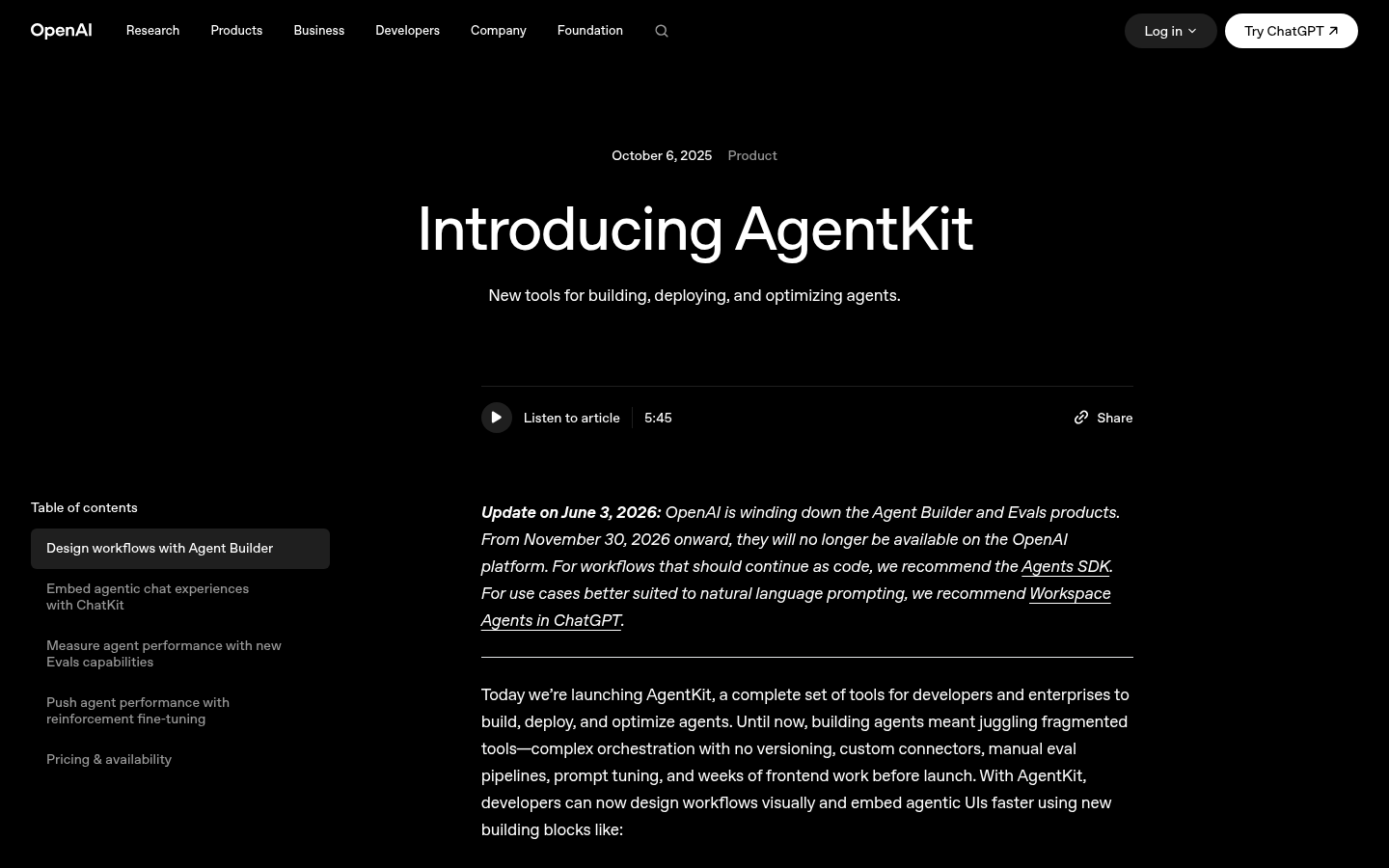
Platform-embedded agents sit inside tools you may already use. Google's Marketing Advisor is a good example: it runs as a Chrome side-panel agent connected to your Google Ads and Analytics accounts, detects issues like missing conversion tags, and offers to install them with your permission — all without leaving the browser. Vertex AI Agent Builder is Google's platform for teams that want to build and deploy their own agents, grounded on enterprise data and monitored through IAM and logging. OpenAI's AgentKit sits at the developer end: a framework on top of the Responses API that lets teams compose multi-agent workflows, connect tool registries, and build evaluations into the process. As one practitioner noted on Medium, AgentKit is "a purpose-built tool for a specific job: deploying polished, evaluated, customer-facing AI agents with world-class chat interfaces in the OpenAI ecosystem." Neither category is universally better; the right choice depends on whether your priority is speed to value or depth of control.
The Real Benefits for Marketing Teams
The honest case for agentic AI in marketing is not that it replaces strategic thinking. It is that it eliminates the low-value work that blocks strategic thinking: the manual checks, the copy-paste reporting, the monitoring tasks that only happen when someone remembers to do them.
Always-On Monitoring Without a Dedicated Analyst
Rank tracking, traffic anomaly detection, backlink changes, and competitor SERP movements are all tasks that benefit from continuous attention but rarely get it at small and mid-sized teams. An agent does not need to be reminded, does not get busy, and does not take weekends off. The value is not that it does the work faster — it is that it does the work at all, every day.
Eliminating Reporting and Audit Overhead
Scheduled recaps, technical SEO audits, and dashboard updates are necessary but time-consuming. An agent can run a weekly organic performance recap, compile it into a structured summary, and post it to Slack or Notion before anyone starts work on Monday — without anyone preparing it. That time goes back to the work that actually requires human judgment.
Faster Decisions from Continuous Data
Weekly reporting is a lagging indicator. By the time a ranking drop appears in Friday's snapshot, the page may have been losing ground for five days. Agents that monitor continuously surface signals in real time, which means interventions happen sooner and compounding losses are smaller.
Risks and Honest Limitations
Agentic AI is genuinely useful. It is also genuinely new, and the risks are real enough that skipping this section would be dishonest. Here is what to understand before you deploy anything.
Hallucinations and Acting on Bad Data
LLMs can produce confident, plausible, and wrong outputs. In a chat session, a hallucinationHallucinationA confident, fluent model output that is simply false. It's a property of next-token prediction, not a bug to be patched out. is an inconvenience — you notice it and correct it. In an agentic loop, a hallucination in step two can propagate into actions in steps three, four, and five before anyone reviews the output. An agent that misreads a data point and concludes a page has been de-indexed might trigger a chain of unnecessary interventions. The mitigation is not to avoid agents; it is to ground agents in authoritative, structured data sources and to build review checkpoints for high-stakes actions.
Traceability and Auditability
When an agent takes a sequence of actions, you need to be able to reconstruct what it did and why — both for debugging and for accountability. Systems without good logging are difficult to trust and impossible to improve. Before deploying an agent on any task that touches live systems, confirm that its action history is recorded in a queryable log.
Security When Agents Have Tool Access
An agent with write access to your CMS, ad platform, or email system is a meaningful attack surface. Compromised credentials, prompt injection attacks (where malicious content in a data source manipulates the agent's instructions), and misconfigured permissions can all cause real damage. Scope agent credentials to the minimum necessary, treat agent access like you would any privileged service account, and review permissions regularly.
Human Oversight and Governance
Google Cloud's framing is useful here: agentic AI "can set goals, plan, and execute tasks with minimal human intervention" — and "minimal" still means some. The governance practices around AI agents are still developing, and most organizations are figuring out the right thresholds for autonomous action as they go. IBM's agentic AI overview and NVIDIA's explainer both note that human oversight remains a critical design consideration, particularly as agent scope expands. Start conservative on autonomy and expand as trust is established.
How to Get Started Without a 6-Month Implementation Project
The good news is that you do not need an enterprise IT project to get started with agentic AI. The practical barrier is much lower than most "agentic AI implementation" guides imply — especially for marketers whose work is already data-rich and repetitive.
Start with One Scoped, Observable Task
Pick a task that has clear success criteria, a short feedback loop, and low consequence if the agent gets it wrong once. A weekly keyword ranking recap is a good first candidate: the output is easy to evaluate (did it correctly identify changes?), the action is read-only (no risk of breaking anything), and the value is immediately obvious. Run it for two to four weeks before expanding scope.
What Good Human Oversight Looks Like Day-to-Day
Human oversight in practice does not mean reviewing every output manually — that defeats the purpose. It means setting clear thresholds for what the agent is allowed to do autonomously versus what it should flag for review. It means reading the agent's logs periodically, not just its outputs. And it means treating the agent's prompt and configuration as a living document that you iterate on when the outputs drift from what you need.
Where Letaido Fits as an Entry Point
For marketers who want to start using agentic AI on SEO and content work, Letaido is the lowest-friction entry point we are aware of. It has direct access to Ahrefs data (no API credit consumption), a library of pre-built marketing skills covering rank tracking, content briefs, site audits, and competitor analysis, and native connectors to Slack, HubSpot, Notion, Linear, and more. Scheduled automations run at any interval. The workspace is shared and always on, so the agent keeps working whether or not you are logged in.
The flat pricing ($99/month including $50 in AI credits) means the economics make sense at SMB scale, not just enterprise. An Ahrefs subscription is required to access Ahrefs data; everything else is included.
If you want to see what one well-scoped agent can do before committing to anything, try this as a starting prompt:
Monitor my top 20 tracked keywords in Ahrefs.
If any keyword drops 5 or more positions since last week,
post a Slack alert with the keyword, current position, previous position,
and the current top-ranking URL. Run this every Monday at 8am.
That one prompt, run through Letaido, is a working agentic AI workflow for marketing.